96% of Engineering Leaders Cite the Importance of Design Standards — But Nearly Half Never Get Applied in Reviews.
96% of Engineering Leaders Cite the Importance of Design Standards — But Nearly Half Never Get Applied in Reviews.


Key Takeaways
.svg)
Key Takeaways
According to CoLab's The Near-Term Impact of AI on Engineering, a research survey of 250 engineering leaders across large manufacturing organizations, adherence to design standards is nearly universally seen as critical. In practice, only a fraction of standards are consistently applied.
The survey data makes clear:
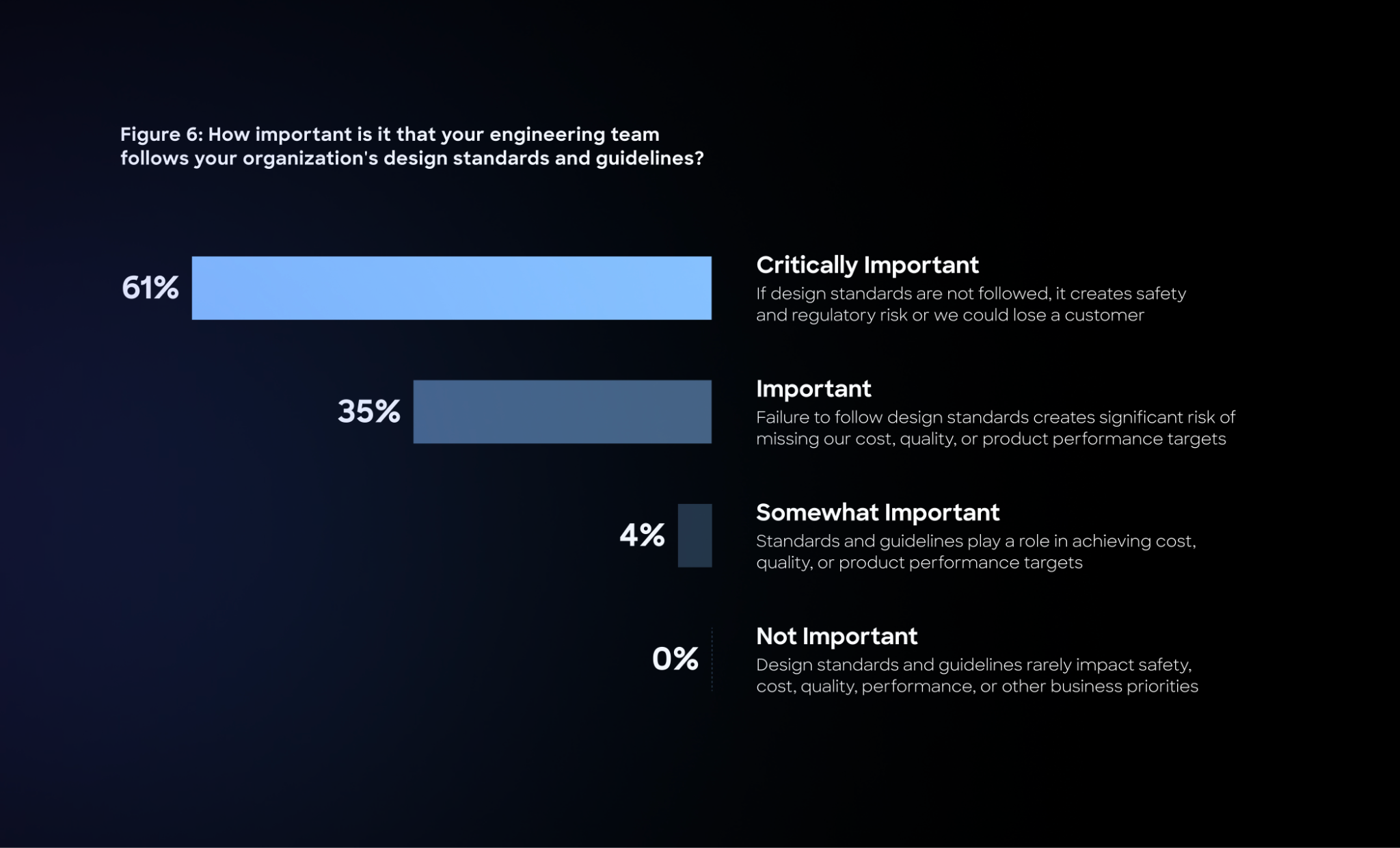
- 96% of engineering leaders rate adherence to design standards as important or critically important, and 61% say failure to follow them creates safety, regulatory, or customer risk;
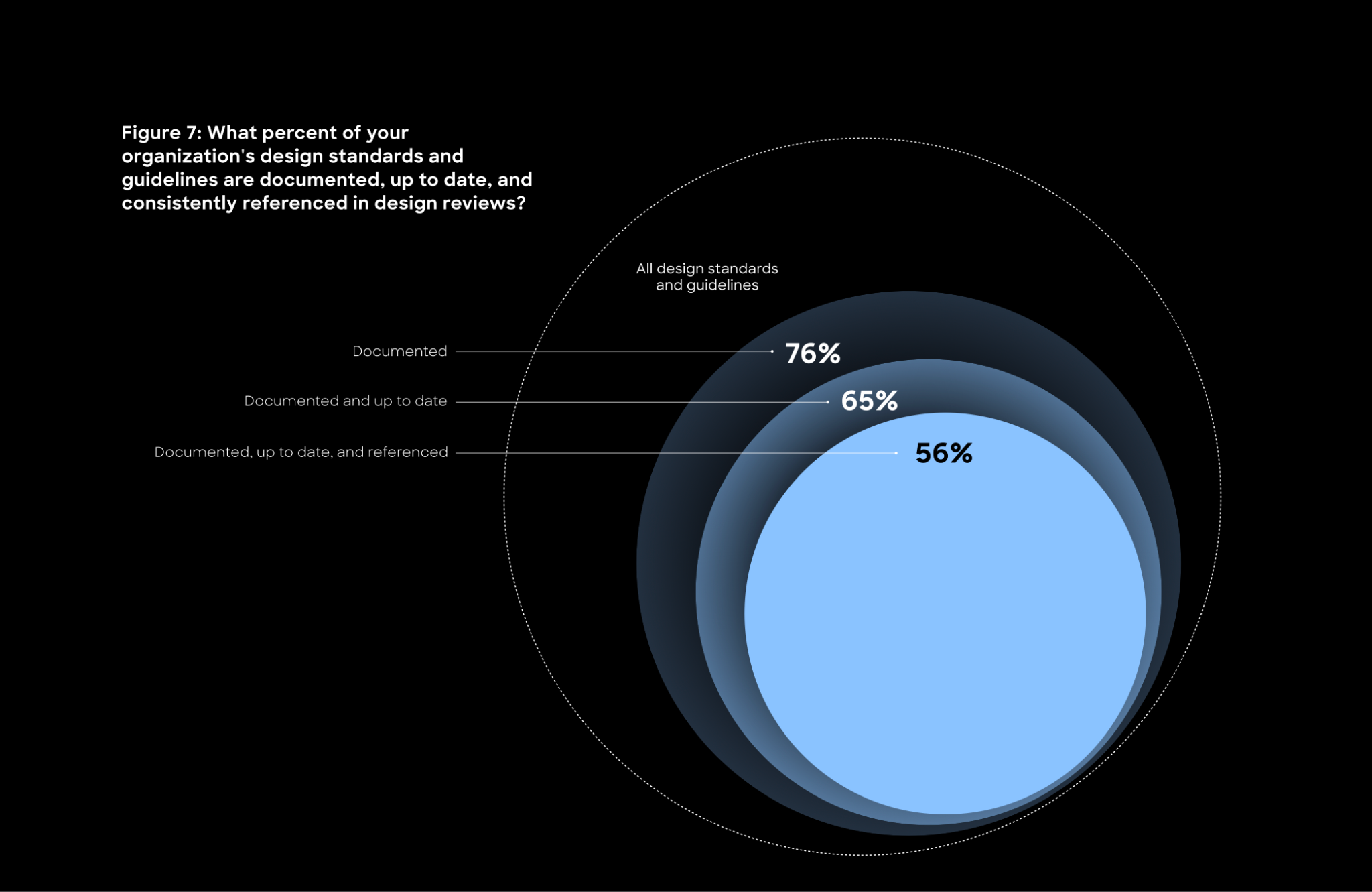
- Only 56% of design standards are actually documented, up to date, and consistently referenced in reviews, which leaves nearly half outside reliable day-to-day governance;
- The gap widens with scale. Respondents at organizations with more than 5,000 employees were the most likely to report that only a small fraction of their standards are consistently applied.
Why Engineering Leaders Prioritize Design Standards
An organization’s design standards encode how engineering decisions should be made. They specify cases like when to apply GD&T, what tolerances are acceptable for different processes, which materials meet environmental requirements, and what wall thicknesses work for molded parts. When standards are followed, manufacturers know precisely how to build a part or product. When they're not, parts can't be made, don't fit together, or fail in the field.
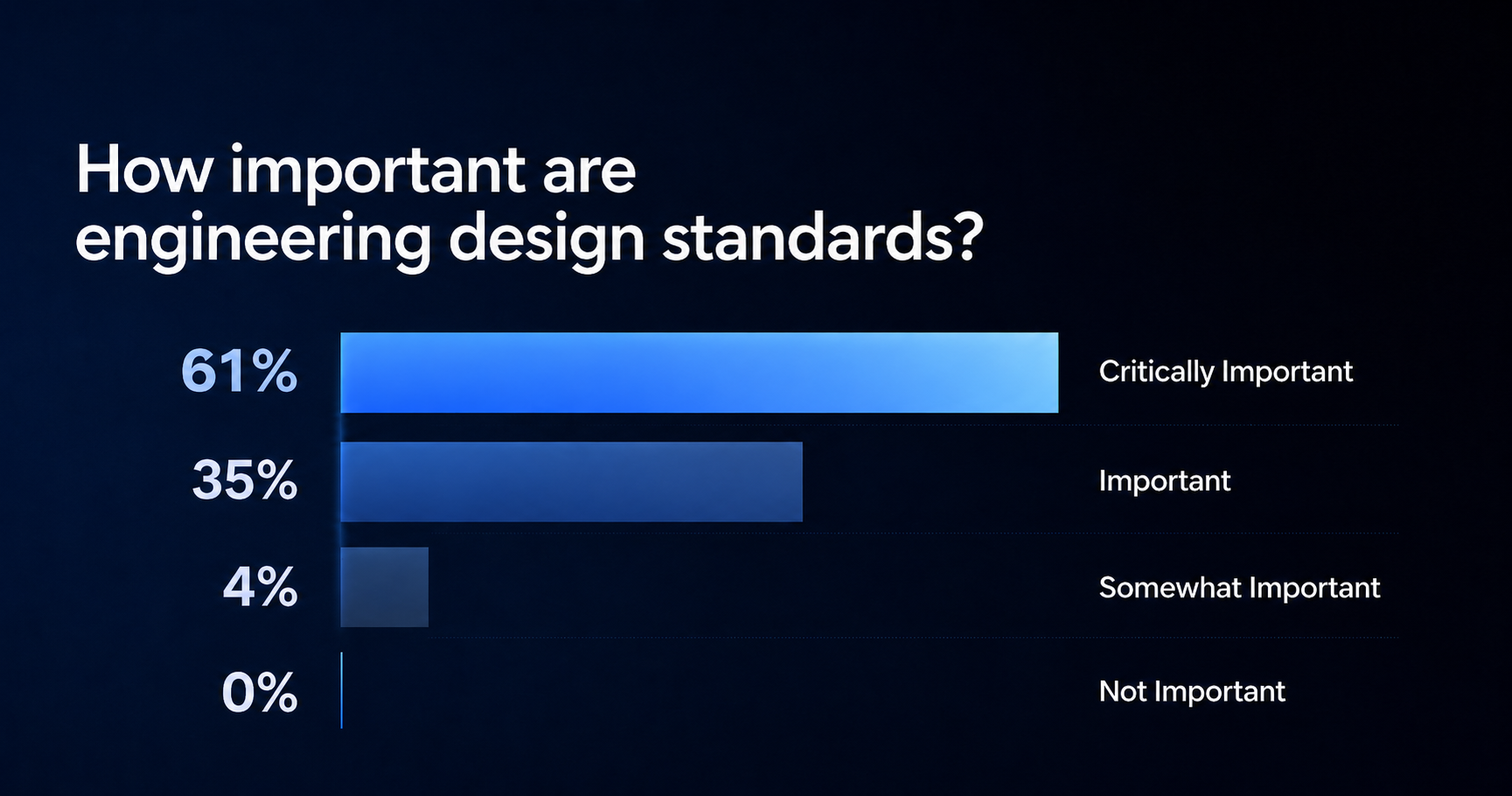
The numbers are telling. Sixty-one percent of respondents rated adherence as critically important, essential to avoiding safety risks, regulatory failures, or the loss of a customer. Another 35% rated it important for cost, quality, and performance targets. Taken together, this means 96% of engineers we surveyed believe standards adherence is vital.
Why Most Standards Aren't Consistently Applied
The survey measured standards compliance against three progressively demanding criteria: standards are documented (76%), documented and current (65%), and documented, current, and consistently referenced in reviews (56%).
The interesting part is that drop from 65% to 56%. Why don’t more standards consistently make it into design reviews? It could be because there’s no ideal system to surface the right standard at the right moment. When companies are running tens of thousands of reviews per year, the standards that get applied are the ones that engineers already know by heart. Everything else stays filed away because there’s just no time to go digging for them.
How Scale Amplifies the Compliance Gap
Nearly half of standards aren't governing day-to-day engineering work. The stakes include safety failures, regulatory breaches, and customer loss, but many organizations don't have processes that ensure standards get enforced reliably.
And the problem only gets worse as companies grow. Respondents from organizations with more than 5,000 employees were more likely to report that only a small fraction of their standards are consistently applied. With bigger teams and more programs running, scale makes it even more challenging to ensure standards are part of the equation.
When Leaders Expect AI to Reach Parity on Standards Checks
The CoLab survey also asked where leaders think all of this is headed. Most estimate that roughly three-quarters of drawing review work could be automated if an AI checker is trained on their organization’s design standards.
AI already outperforms human checkers on basic errors. For standards adherence, most expect AI to reach parity within the next one to two quarters. More complex work like DFM and assembly reviews sits further out at one to two years.
That progression makes sense. Standards checks are rules-based and high volume, which suits automation. AI can apply the same standard to thousands of drawings while engineers focus on the judgment calls that fall outside the rules.
There is an interesting pattern emerging here. Leaders know that design standards are critical, but less than half get applied consistently. The shortfall grows with organizational size and the complexity of new programs. Could AI and automation really be the best method to ensure that design standards are more widely referenced and enforced?
If you want more interesting data on AI for engineering, download the complete survey report for free.


This article is part of the CoLab Research Reports series, where we publish findings from both engineering leader surveys and aggregated, anonymized CoLab data.
The Near-Term Impact of AI on Engineering