
The Near-Term Impact of AI on Engineering: Predictions and Analysis from 250 Engineering Leaders
Engineering leaders universally agree that AI will reshape how engineering work gets done. The challenge is not whether to adopt AI, but how quickly it will begin to change core work, and what that means for teams over the next 24 months.
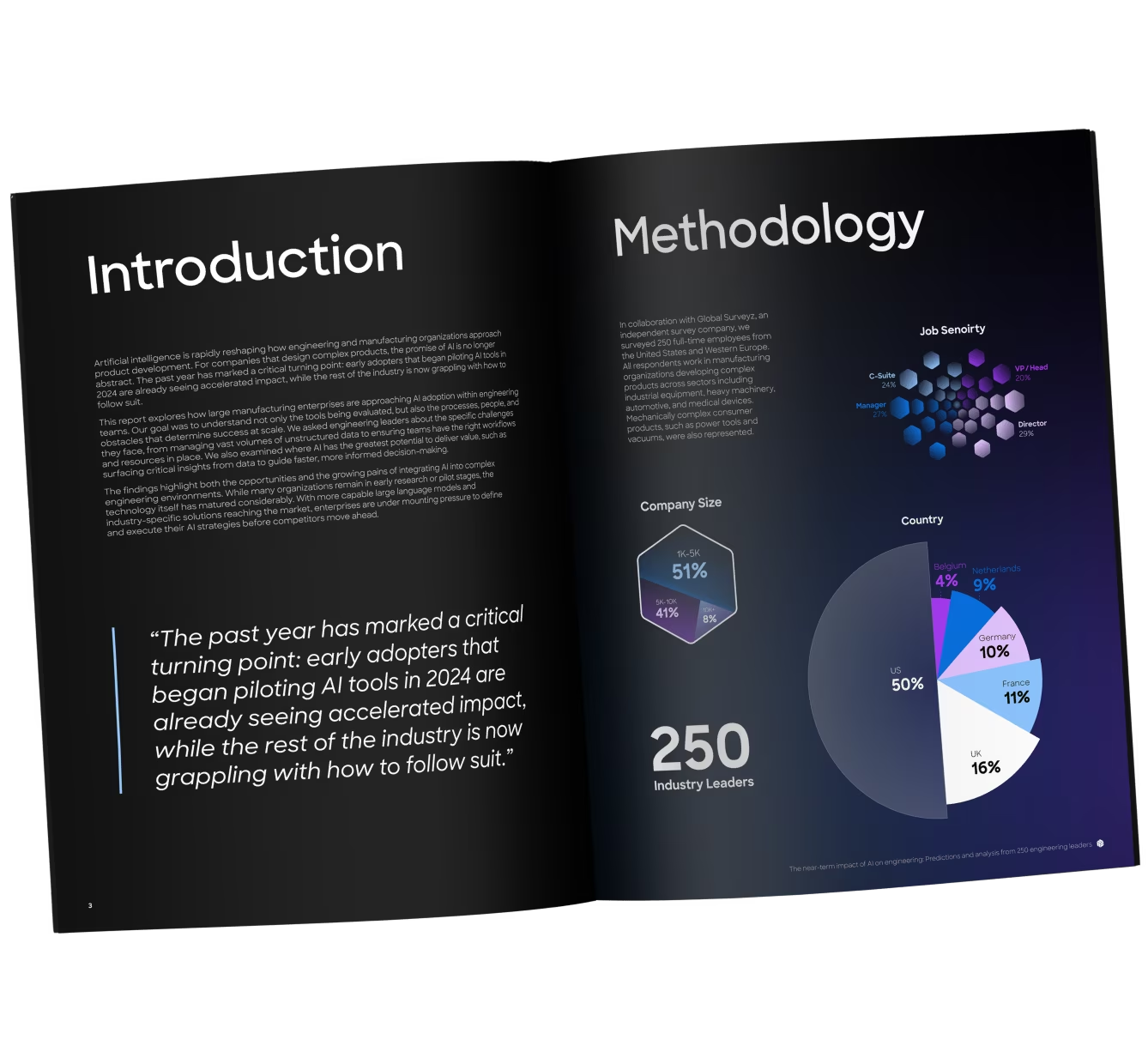


Engineering leaders believe AI adoption is existential
100% of surveyed engineering leaders say it’s important that their team fully adopts AI in the next 1-2 years. 95% say it’s so important that failing to fully adopt AI will either: put them out of business or cause them to miss company performance goals. This means, in practice, AI is in a 12-24 month decision-to-adoption window. And that window is closing fast.
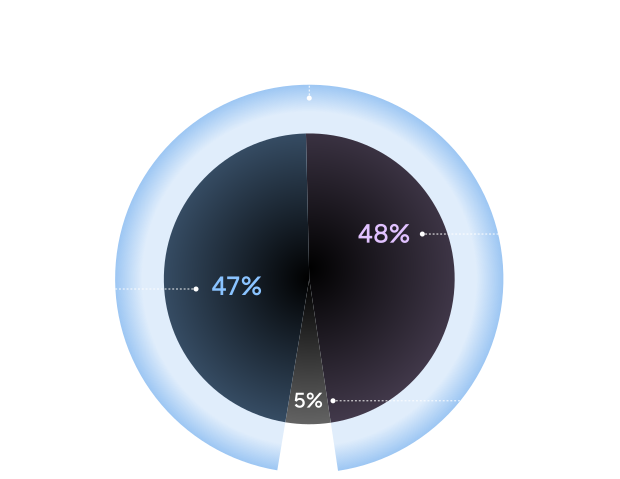
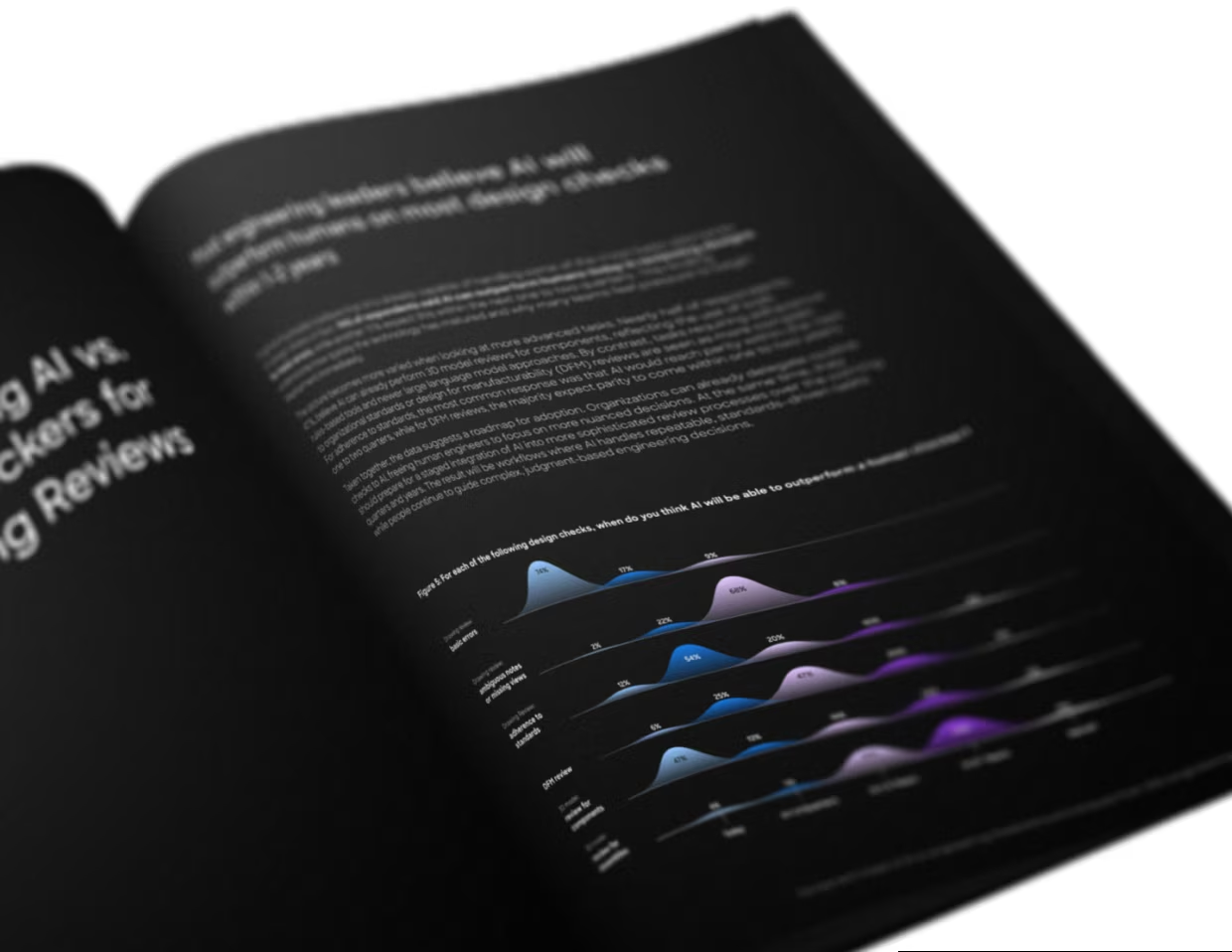
And, optimism in AI engineering capabilities holds strong
Engineering leaders increasingly see AI adoption as existential within the next 12–24 months. At the same time, 74% say AI already outperforms human checkers on basic design checks, with more advanced checks reaching parity in the near term (next 12 months). This timeline explains how engineering teams should be responding: starting with workflows where AI is already strong, while keeping engineers focused on judgment-heavy decisions.
However, organizational blockers constrain AI momentum
Despite how quickly AI capabilities are advancing, engineering leaders face real internal obstacles that have little to do with whether the technology works. Challenges like poor data hygiene, complex change management, unclear ownership, and integration overhead slows initiatives more than cost or ROI concerns. These barriers are less about whether AI can deliver value and more about whether organizations can move fast enough to adopt it.
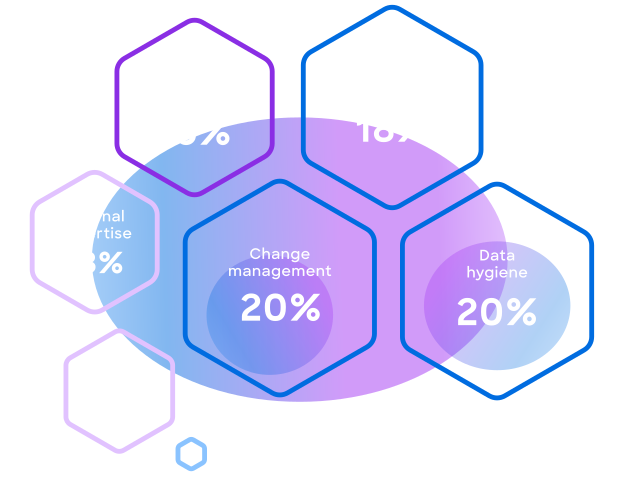
Engineering teams can build their own momentum by solving scalable workflow problems
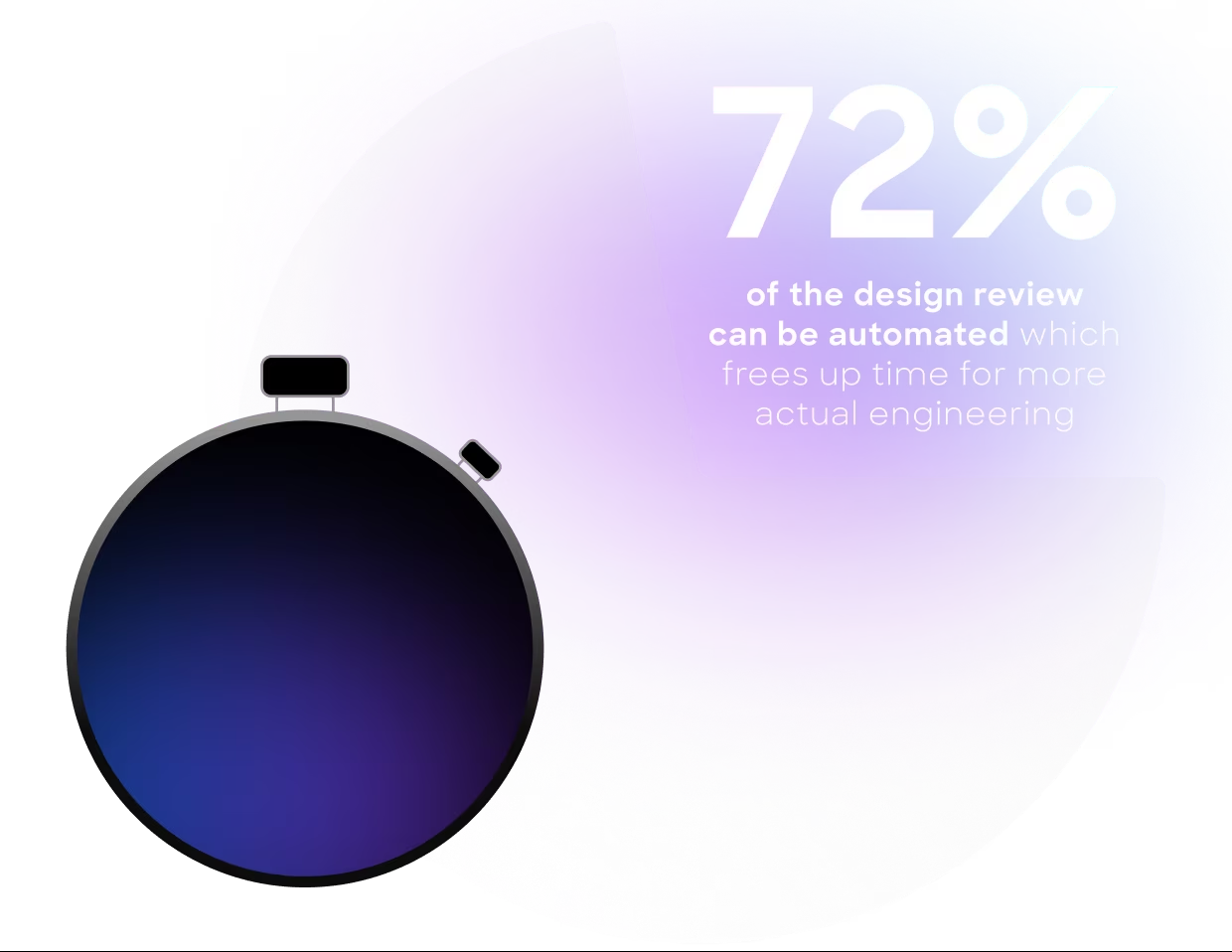
Large engineering organizations conduct tens of thousands of drawing reviews each year, and leaders estimate that 72% of those reviews could be handled by AI trained on company standards. At the same time, only 56% report those standards are consistently applied in reviews. Together, this points to a clear opportunity: high-volume, standards-driven workflows where pain is already felt. These are the areas where AI can deliver visible value quickly—while keeping engineers firmly in control.